I need to be heard. I want my voice to matter. I don’t want to be dismissed or have my concerns, struggles or frustrations minimized. It matters. Don’t ask my opinion just to appease me. Allow it to help enact change for the better or don’t bother asking.
We’ve all been there, right? We’ve had frustrating times when we thought no one was listening. Please. I urge you. Remember how that felt.
I’m tired. No. I’m exhausted. The world is out of control. The impact of the virus is still completely unknown to all of us, yet we are fighting about wearing masks. Our leader incites hate on a daily basis—our emperor with no clothes—yet so many keep insisting he wears the finest silk sewn with golden thread.
But worse yet is a struggle that has been ongoing since the first slave ships arrived in America in the early 1600s. Stop. Take a moment to think of what year we are in, yet our black brothers and sisters still battle daily for the basic right to live without worry of discrimination.
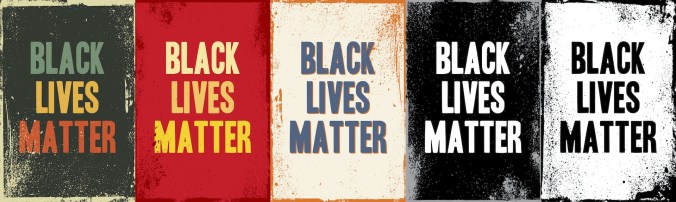
Ironically, this thing that I am struggling with right now—this need to be heard, to know my voice and contribution matters—coincides with more heartfelt calls for black lives to matter. How many times must they ask before we listen? I am here to tell you my struggles pale in comparison but my empathy overflows.
I’m a writer so I have a lot of big thoughts, nagging, ruminating, keep-me-up-at-night thoughts that fill my head until there is room for nothing else. That’s why I write. The last couple of weeks that writing mostly takes place on Facebook. Some of you have seen it. I pop up in your Facebook feed, trying to call out and quiet the subtle and overt racist rhetoric, take on the battle to the best of my ability and give the black community a momentary respite because they’ve been fighting alone for too long.
My efforts are a drop in an enormous bucket. But as I’ve been telling people who can’t understand why certain statues need to come down or why confederate flags have people in such an uproar, every step counts. Hate symbols matter. We must get rid of them.
What about our history? Are we going to get rid of Auschwitz? No. But we are definitely not going to memorialize Hitler in a statue and give it space in a place of honor in front of a courthouse. We are not going to fly a flag with a swastika emblazoned on it.
I’ve encountered some mind-blowing statements. I can’t say anything right. I don’t see color. I love all people. What? If you love all people, then see them. See the color of their skin and love them. If you don’t think you can say anything right, search inside yourself to understand why. That’s not a black problem. That’s your problem. Own it.
The “I don’t see color” statement always takes me back to second grade and Vinnie D., a wealthy boy, who spewed his disdain for black people while playing with me and Lisa T., a black girl. Huh? Vinnie D., why are you saying such terrible things about black people when our friend, Lisa, is black? His response: Lisa isn’t really black. Right, Lisa? Lisa, who was indeed black, nodded her head in agreement.
What? I couldn’t understand it then and don’t understand it now. Lisa was black. Vinnie D. liked Lisa, but he didn’t like that she was black. He couldn’t reconcile the two and declared she was something different, sending a strong message that black is bad but I will be your friend anyway. Oh, there’s just one thing: You can’t really be black.
See color. See Lisa. Love Lisa.
I love Aunt Jemima. I grew up with Aunt Jemima. How dare Quaker Oats? I’ll never buy their products again. Really? Good job, Quaker Oats. It took you long enough. Brands evolve over time. The fact that Aunt Jemima has survived this long is telling. Let us not forget though what she represents—a time in our history when a black person served at the beck and call of white people, a racial stereotype that has no place in the 21st Century. A photo on the box of pancake mix is not history. It’s a symbol of systemic racism. It needs to go.
I grew up poor. I was sexually abused. I lived in the projects. I’m not privileged. You’ve struggled. You have had pain. You didn’t deserve all the hardships you have endured. No one is taking that away from you. Yes, there was a time when the Irish and Italians were both mistreated in this country. Guinea, goomba, WOP, dago—they are all derogatory terms for Italians. I know them well. I’ve heard them.
Nonetheless, my skin is white. When I go into the store, when I get stopped by a police officer if I’m driving too fast, when I walk into a neighborhood that isn’t my own, my skin is white. The store clerk, the police officer and the neighborhood watch captain, they see color. My color is white. Alarm bells don’t go off. Red flags don’t go up. Suspicions don’t rise. That is white privilege. One example.
Black lives matter. Your life as a white person matters, too, but in this country, that’s a given. Maybe you don’t feel like you matter. I get that. But in a larger sense, you do. But right now, and in the collective conscience of our country, black lives don’t matter. We see examples of that playing out every day.
Black lives need to matter. Put a stop to the hate. Dig deep. Let’s uncover all the places where systemic racism hides. Call it out. Stomp it out. Fight for change.
If you want your life to matter, my life to matter or all lives to matter, black lives need to matter.
 Uneven Pavement